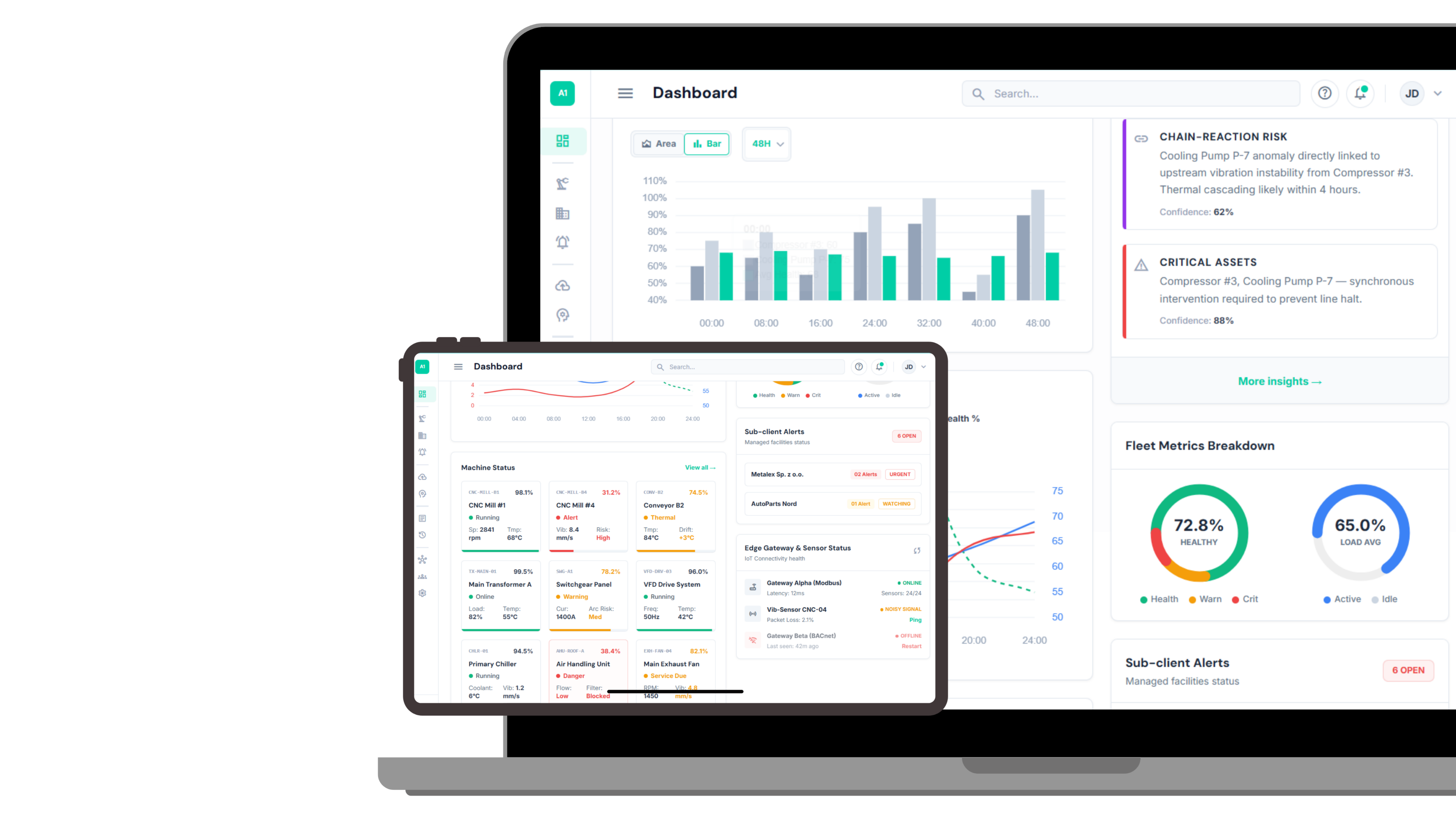
One operating view for engineering, service, and management.
Use the same platform to investigate fault context, compare site health, review integrations, and justify operational spend.
SKOLDERN features are designed for real engineering workflows. They help teams see fault location faster, coordinate across multiple sites, connect industrial systems, and convert machine risk into action and business justification.
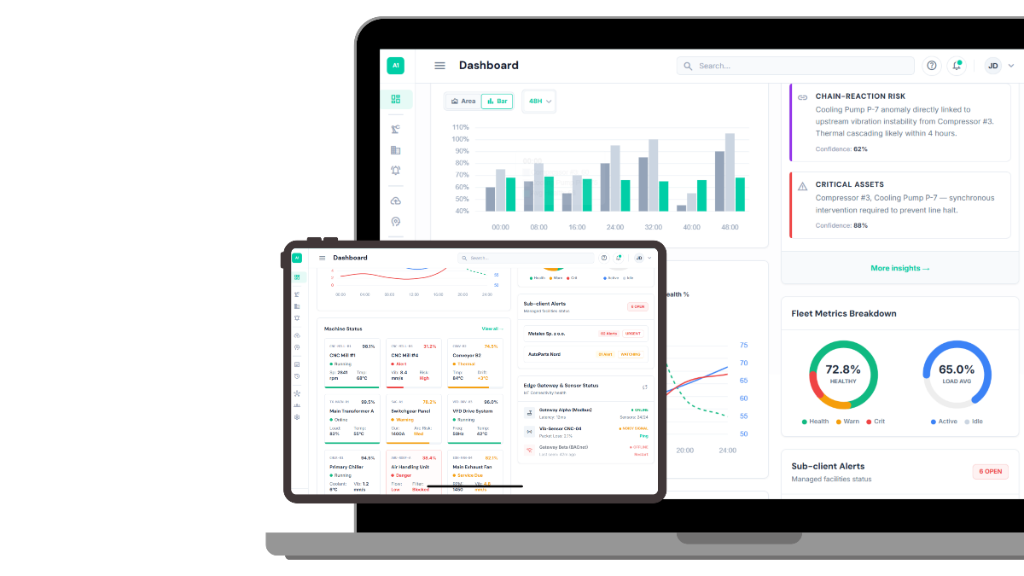
The platform is not just one dashboard. It combines asset context, remote operations visibility, industrial connectivity, field-ready reporting, and economic prioritization into one operating model.
Show the asset, likely fault zone, surrounding equipment, and the access path engineers should inspect first.
Compare plants, power sites, depots, and service regions in one command layer instead of isolated local views.
Bring SCADA, PLCs, historians, APIs, CMMS, and edge devices into the same predictive workflow.
Monitor generation support assets, electrical auxiliaries, pumps, fans, and remote energy infrastructure.
Deliver fault summaries, ranked alerts, operational notes, and service-ready evidence that speeds action.
Translate machine risk into avoided downtime, site exposure, and rollout logic that leadership can approve.
3D context and ranked evidence help engineers spend less time locating the problem and more time resolving it.
Multi-site dashboards reduce dependence on local spreadsheets, fragmented calls, and delayed escalation.
Industrial connectors and edge workflows help teams start from current systems instead of waiting for a full redesign.
Economic prioritization focuses the rollout on assets and sites where avoided downtime matters most.
Use the same platform to investigate fault context, compare site health, review integrations, and justify operational spend.
Engineers can review asset context, signal behavior, and likely fault areas before walking the floor or dispatching field teams.
Operations teams can rank locations, compare alert pressure, and direct attention where a stop is most expensive.
Every major feature is tied to reduced downtime exposure, faster intervention, lower travel burden, or more defensible maintenance decisions.