Report clarity
Summaries designed for both engineers and management.
A useful predictive platform does more than raise an alert. It explains urgency, evidence, likely impact, and the next operational action so engineering teams and management can act with confidence.
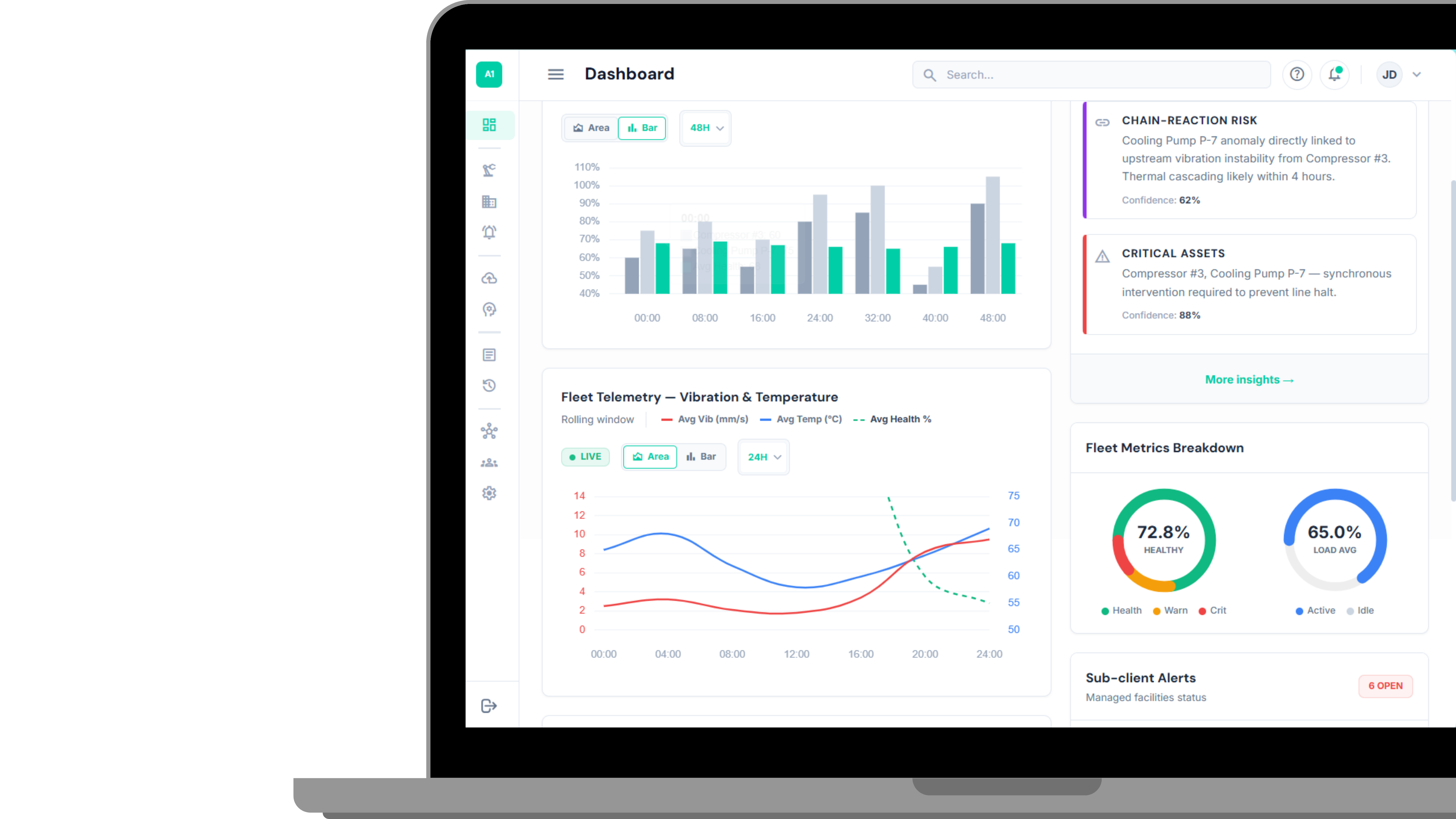
Many monitoring tools generate noise. SKOLDERN focuses on clarity: what is happening, how urgent it is, what the likely consequence is, and what action path makes the most operational and economic sense.
Summaries designed for both engineers and management.
Separate what needs action now from what should be observed.
Link trend interpretation to the alert, not in another disconnected view.
Help operations and service teams decide the next step faster.
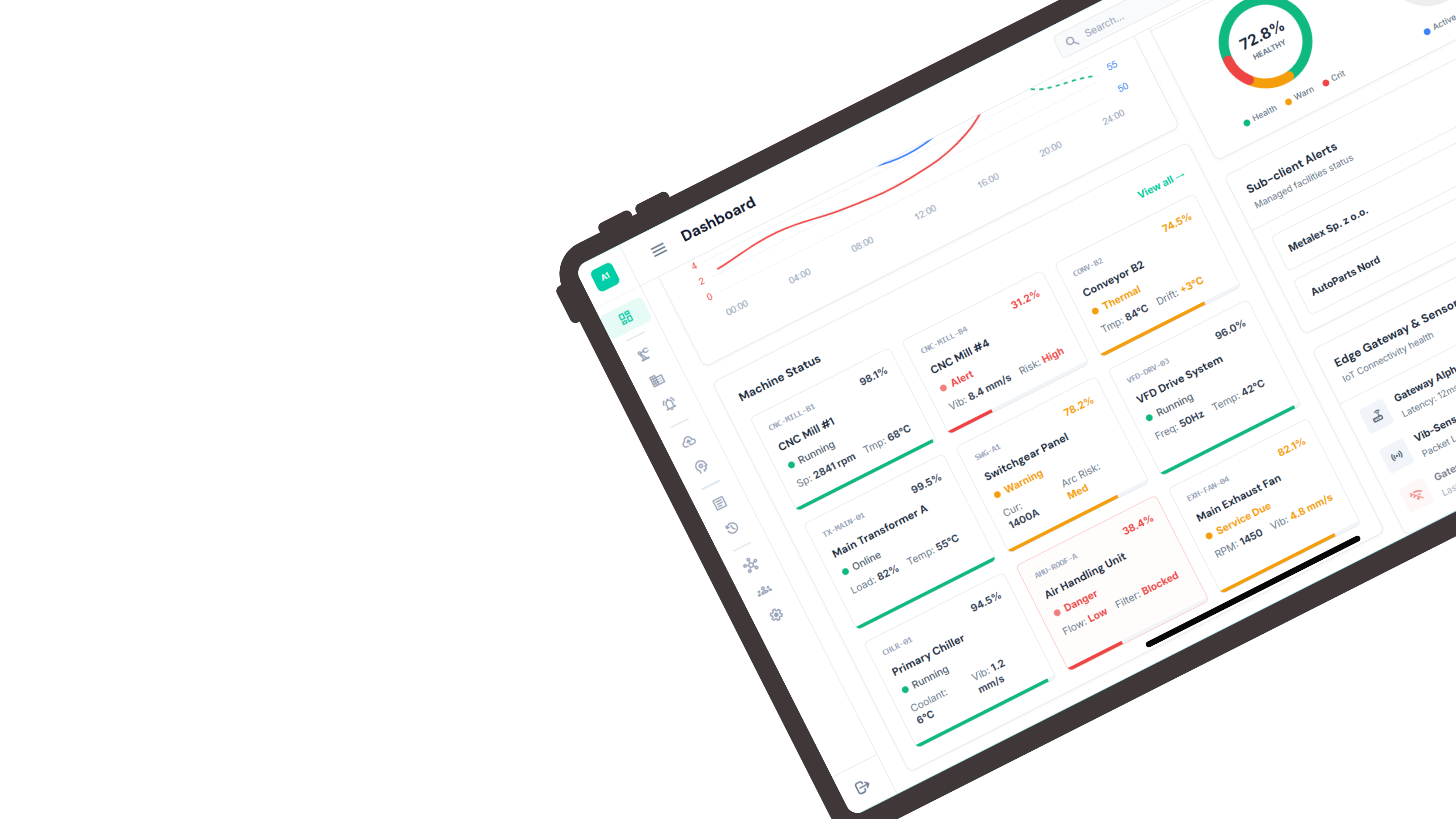
Clear alerting and reporting help teams move faster from detection to practical intervention.
These features turn monitoring output into a clearer engineering and business workflow.
Separate critical, warning, and normal states so teams do not waste attention equally across all assets.
Show how the issue is evolving so teams understand whether the risk is accelerating, stable, or becoming urgent.
Translate machine condition into short, practical reports that can guide engineering and leadership response.
Support service providers and contractors with clear evidence that justifies preventive work and priority response.
Reduce time spent debating whether a warning matters by making the evidence and likely impact easier to trust.
Support approval by linking condition and urgency to downtime, service cost, and operational exposure.
Ranked, explained output reduces the noise that makes teams ignore monitoring systems.
Engineers, operations, and management can understand the same evidence without waiting for manual translation.
Service providers can use reporting quality to justify higher-value preventive work instead of reactive emergency service only.
Help teams know what truly needs intervention first.
Reduce time from anomaly detection to operational decision.
Support better approval and maintenance conversations.
Make preventive action easier to justify before failure becomes visible.
A strong report saves more than time. It can reduce unnecessary delay, avoid emergency premiums, and support quicker maintenance approval.
SKOLDERN identifies anomalies and ranks them by severity, confidence, and likely impact.
Trend, condition, and machine context are attached so the alert can be understood quickly.
The system packages the issue into a format that supports review, escalation, and maintenance planning.
Teams use the report to approve a visit, assign service work, or monitor the issue under a defined plan.
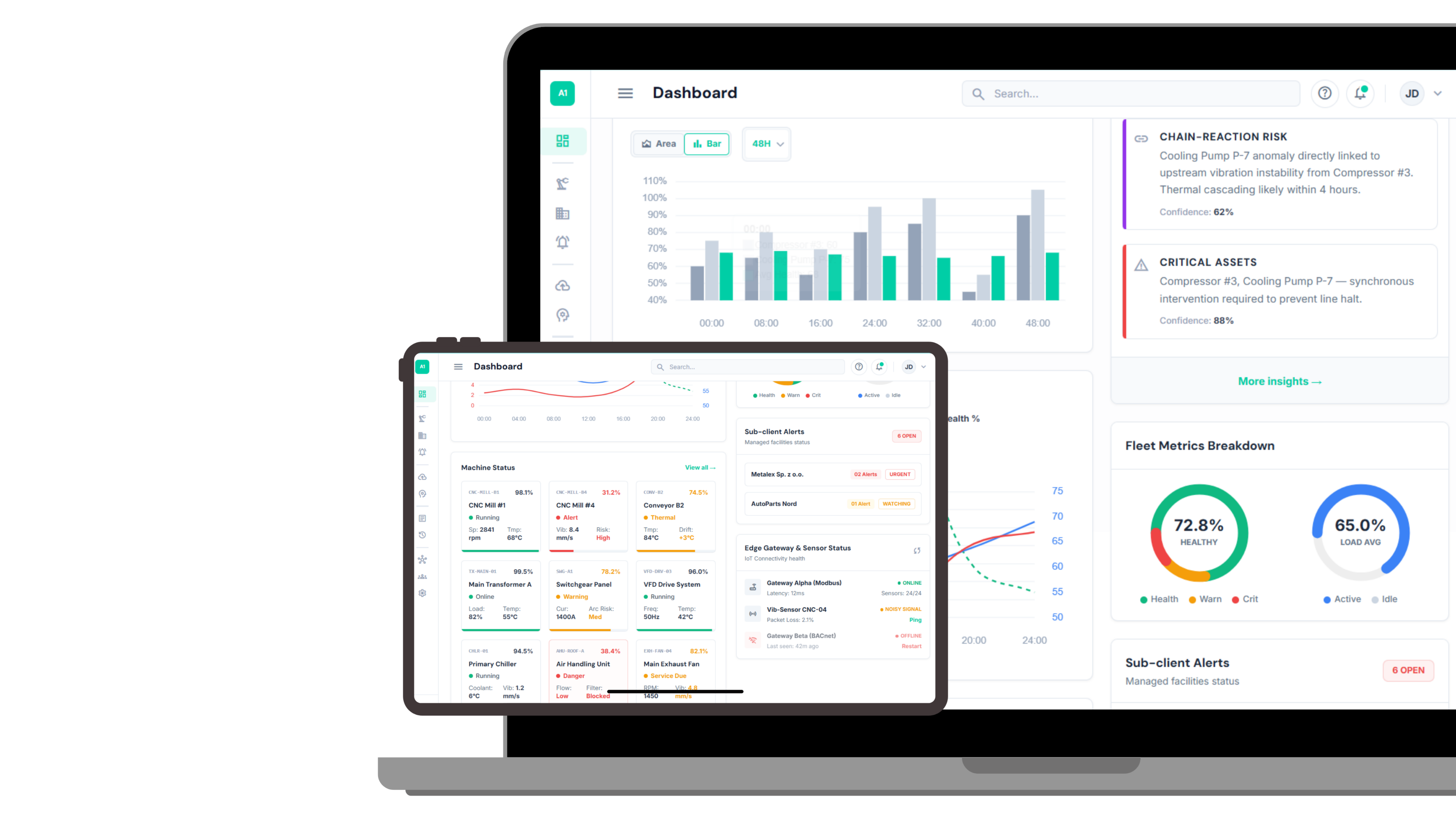
The goal is to shorten the path from machine signal to maintenance response and business decision.
Because raw alerts alone rarely help teams decide urgency, likely impact, or the best next action.
Yes. Better reports make preventive maintenance easier to explain and sell to customers.
Yes. Faster approval and reduced uncertainty can shrink downtime windows and emergency cost exposure.
Yes. They are designed to support both technical interpretation and management-level decision review.
This is especially useful when teams already collect data but still struggle with alert overload, slow escalation, or reports that do not trigger action.
We can help map the current decision path and show where clearer, more operational reporting would save time and cost.