Asset ranking
See which assets justify intervention first.
SKOLDERN helps teams decide where to start, where to scale, and which assets justify the next investment. The goal is not just visibility. It is better economic prioritization.

The strongest rollout decisions happen when risk is connected to cost. SKOLDERN helps teams move from “this asset looks unhealthy” to “this failure path justifies action, spending, and rollout sequence because the exposure is meaningful.”
See which assets justify intervention first.
Translate health into financial exposure.
Decide where pilots and expansion create the best return.
Help leadership approve action with more confidence.
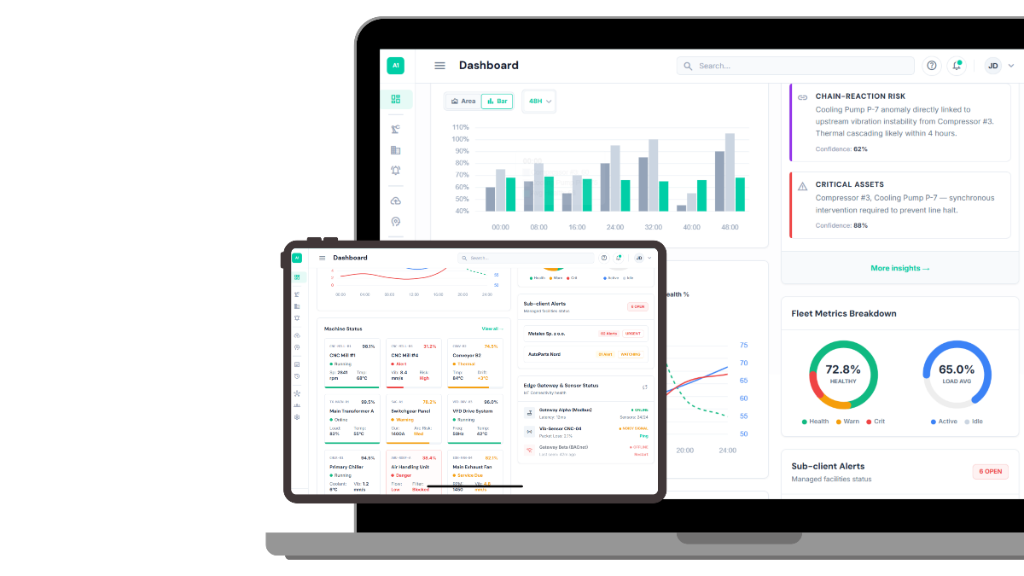
The feature supports organizations that want to invest where savings and avoided exposure can be defended clearly.
Designed to help leadership and engineering align around where predictive maintenance should start and where it should scale next.
Rank assets by likely downtime exposure, operational importance, and cost of delayed action.
Connect machine condition to production loss, emergency cost, and hidden operational waste.
Choose the best initial asset group, plant area, or site for proving ROI before wider expansion.
Support service organizations that want to justify higher-value preventive offerings with measurable customer savings.
Balance investment between different lines, plants, or energy sites based on real operational exposure.
Give leadership a clearer explanation of why a trial, rollout, or maintenance intervention should be approved now.
Begin where downtime exposure and operational relevance make success easier to prove.
Support spending decisions with clearer financial logic instead of intuition alone.
Service providers can frame preventive work in terms that customers recognize commercially.
Focus on the assets and sites where value is easiest to prove.
Avoid rolling out broadly before priorities are clear.
Give leadership a sharper case for action.
Show how preventive intelligence protects real operating value.
Repeat the business case here: the goal is to estimate which asset or site deserves action first and how much value earlier warning could protect.
Review which assets or sites carry the largest operational and financial consequence if failure occurs.
Choose the initial deployment area where earlier warning is likely to produce visible savings and practical wins.
Use reports, alert outcomes, and avoided issues to build a stronger case for scaling.
Roll out across more assets or sites according to measured value, not guesswork.
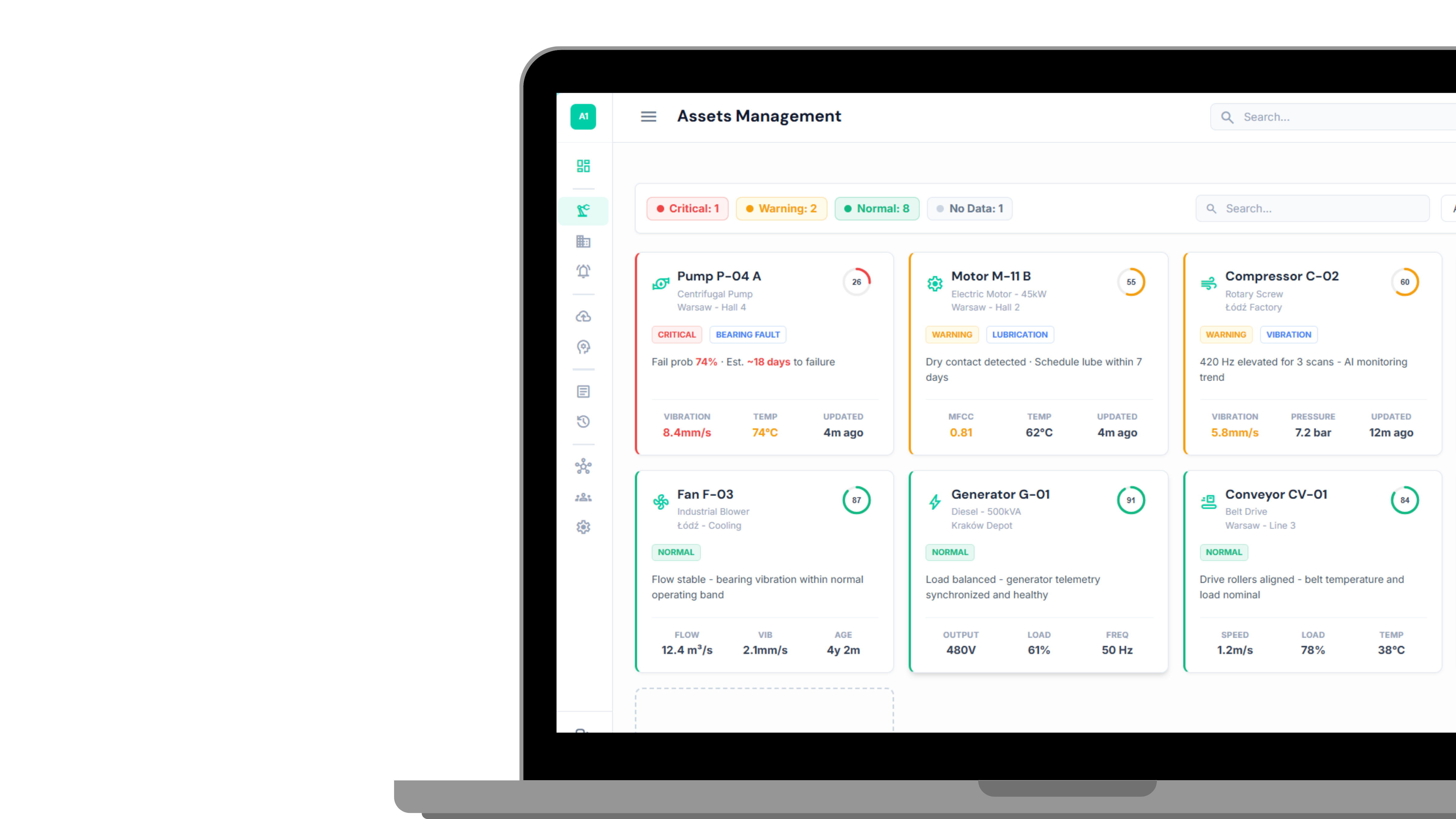
The best predictive maintenance programs align operational insight with a clear economic narrative from the start.
Because starting where the economic case is strongest usually produces faster proof, lower risk, and better long-term adoption.
Yes. It makes it easier to show customers why preventive action protects more value than reactive repair alone.
No. It can also support considerations such as emergency labor, spare parts, site availability, and broader operational disruption.
Because this feature is specifically about turning condition insight into an investment-grade commercial argument.
We can review your operating context, identify the strongest business case, and suggest a rollout sequence that balances technical value with economic return.
Use a technical and commercial consultation to decide where the first deployment should begin and how success should be measured.