Availability view
Connect asset state to operational availability impact.
Utility operations do not only care about repair cost. They care about availability, missed generation, field logistics, auxiliary systems, and the economic impact of delayed intervention across remote or distributed assets.
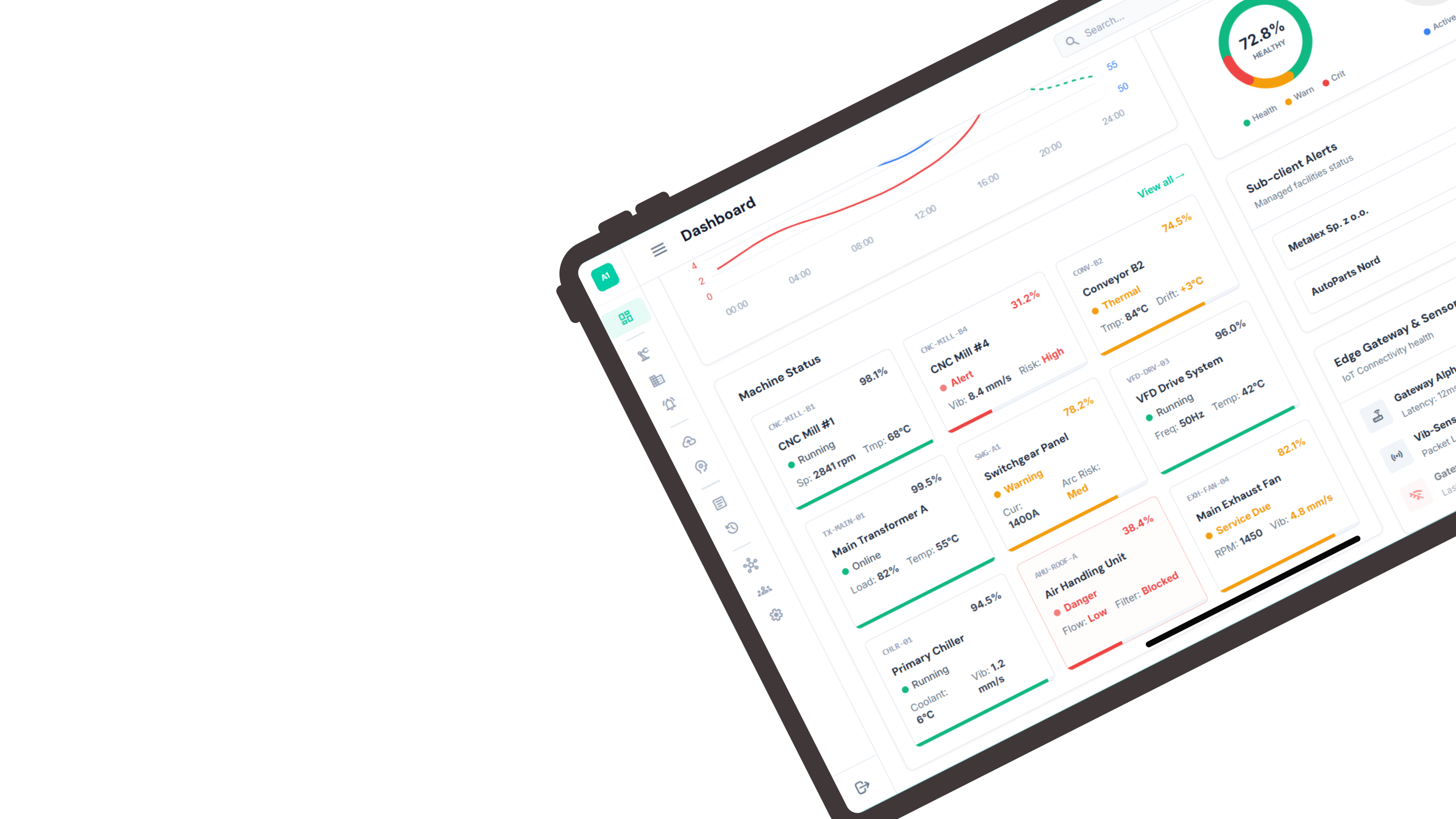
For utilities and renewable-energy operators, the cost of failure includes availability loss, missed output, difficult field access, spare-part timing, contractor dispatch, and operational continuity across remote infrastructure.
Connect asset state to operational availability impact.
Consider missed generation and service continuity, not just repair invoices.
Support field dispatch and intervention timing across distributed sites.
Monitor the support equipment that quietly protects bigger assets.
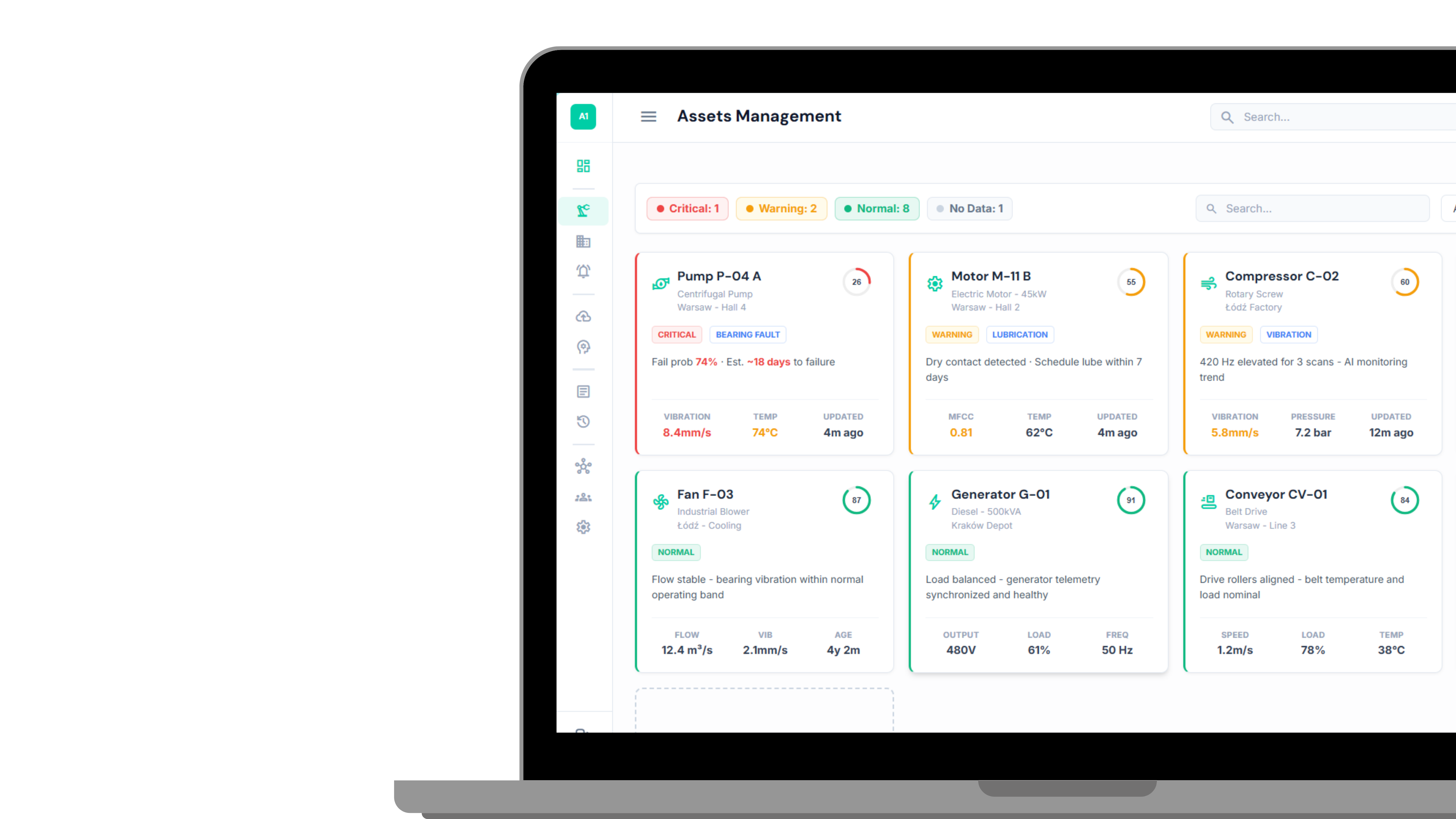
Utility reliability depends on more than one machine. The feature helps teams understand supporting systems and remote asset exposure together.
Built to support industrial energy environments where operational continuity depends on auxiliary systems and site-wide visibility.
Evaluate asset behavior against the operational importance of keeping a site online and stable.
Support decisions by showing where condition issues may lead to missed output or operational disruption.
Include pumps, fans, cooling, drives, and electrical auxiliaries that protect critical generation or utility processes.
Track remote facilities and compare which site is carrying the largest alert or availability pressure.
Use condition evidence to decide whether a field visit is urgent, planned, or can be coordinated with wider site work.
Support a broader business case by combining maintenance exposure with availability and production economics.
Earlier insight into auxiliary or rotating equipment issues helps protect output availability.
Remote monitoring reduces unnecessary dispatch and improves visit timing for high-value locations.
Teams can balance repair urgency with site impact, asset importance, and service continuity.
Protect the uptime that matters most to the utility operation.
Frame machine condition in business terms leadership understands.
Move field teams only when evidence and economics justify it.
Include critical auxiliaries that are often ignored until they fail.
For utilities, hidden cost often includes both maintenance impact and operational output exposure.
Bring in asset, electrical, and auxiliary context from the systems already operating on the site.
Interpret condition against the role that asset plays in maintaining output or service continuity.
Compare remote and local issues so teams know where visits and intervention have the strongest value.
Use the insights for maintenance sequencing, spare-part timing, contractor scheduling, and site-level reliability planning.
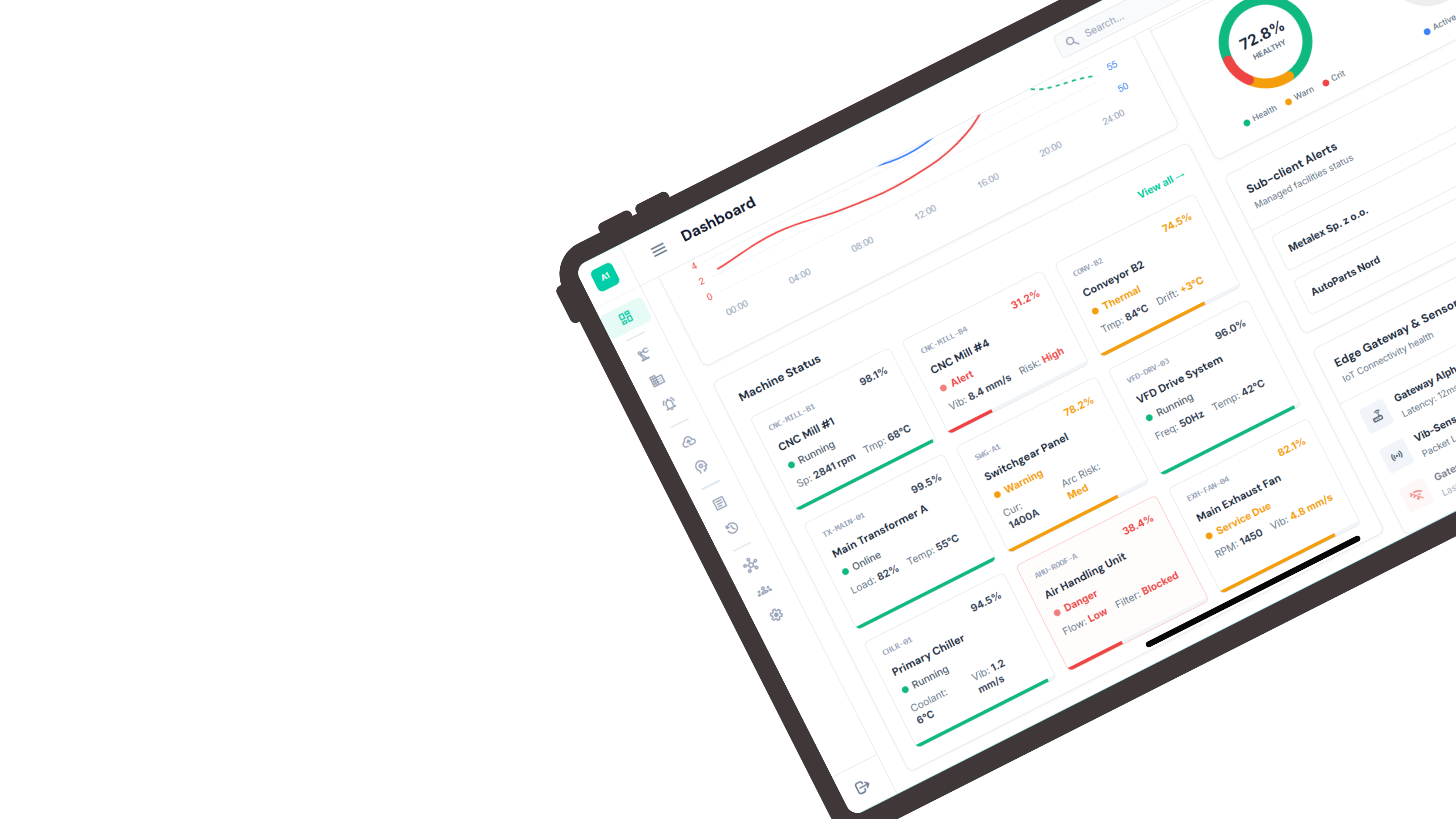
Visibility matters even more when sites are hard to reach or when an auxiliary failure can cascade into a wider outage.
No. It is also valuable for pumps, fans, cooling, electrical auxiliaries, and site-support equipment that protects broader availability.
Because missed generation or service continuity can be more expensive than the repair task itself.
Yes. Remote visibility helps reduce unnecessary trips and improves timing for planned field intervention.
Yes. The feature supports distributed energy and renewable operations where availability and field logistics are both important.
We can help identify which systems, auxiliaries, or remote locations should be prioritized first for predictive monitoring and operational visibility.
Book a technical consultation to review the asset classes, site availability logic, and field-service workflow that matter most in your environment.