Protocol-ready
Connect common industrial sources without forcing one architecture.
This feature is built for real industrial environments where SCADA, PLCs, historians, gateways, APIs, CMMS, and electrical systems already exist. SKOLDERN connects operational data to predictive workflows so integration becomes an accelerator, not a blocker.
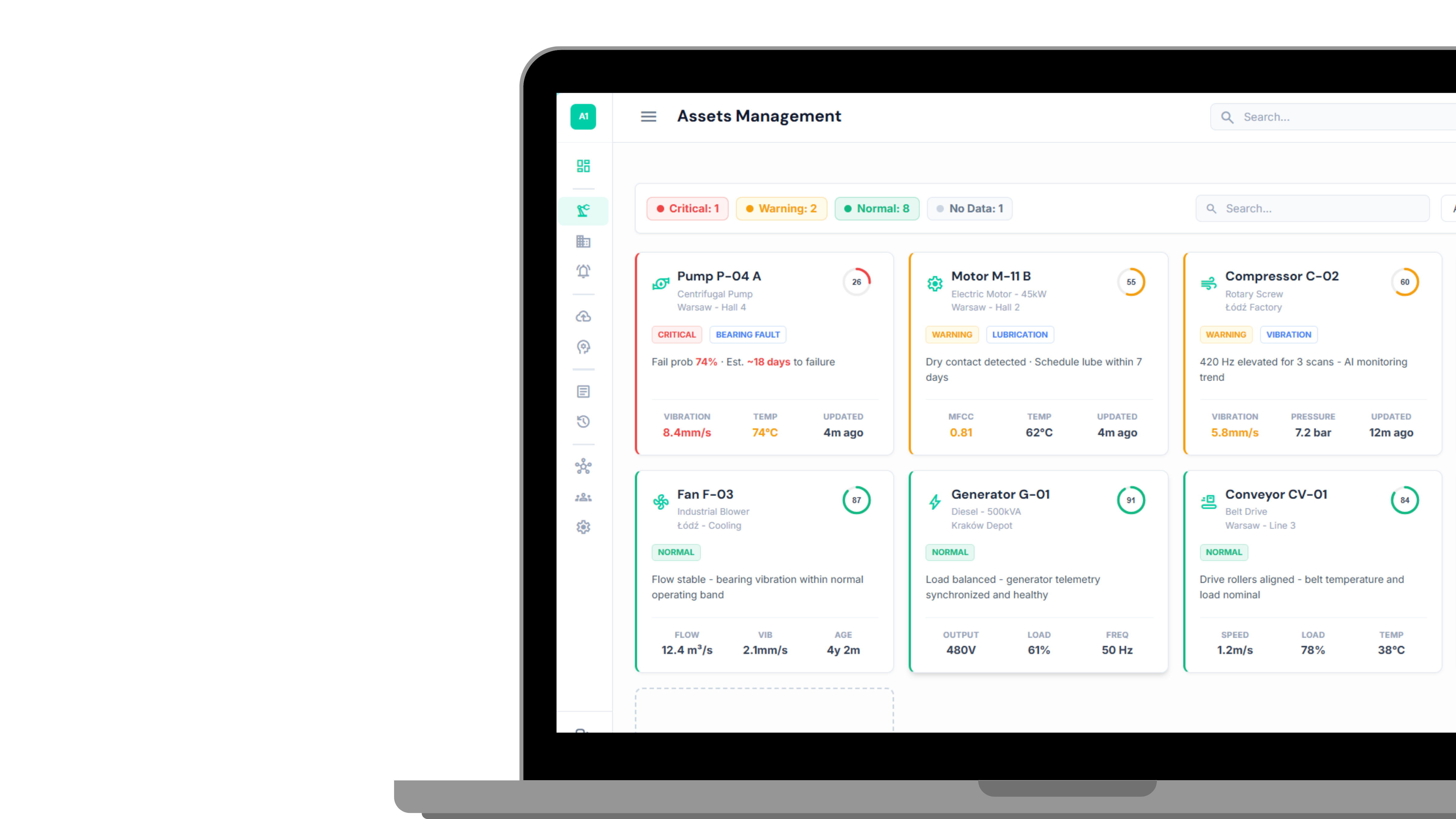
Many industrial AI projects fail because value is delayed by integration complexity. SKOLDERN is designed to connect with available plant systems, exported telemetry, edge devices, and maintenance workflows so teams can prove value first and deepen connectivity later.
Connect common industrial sources without forcing one architecture.
Start narrow, then widen the integration footprint after ROI is visible.
Connect operational systems and action systems together.
Reduce deployment friction and accelerate first value.
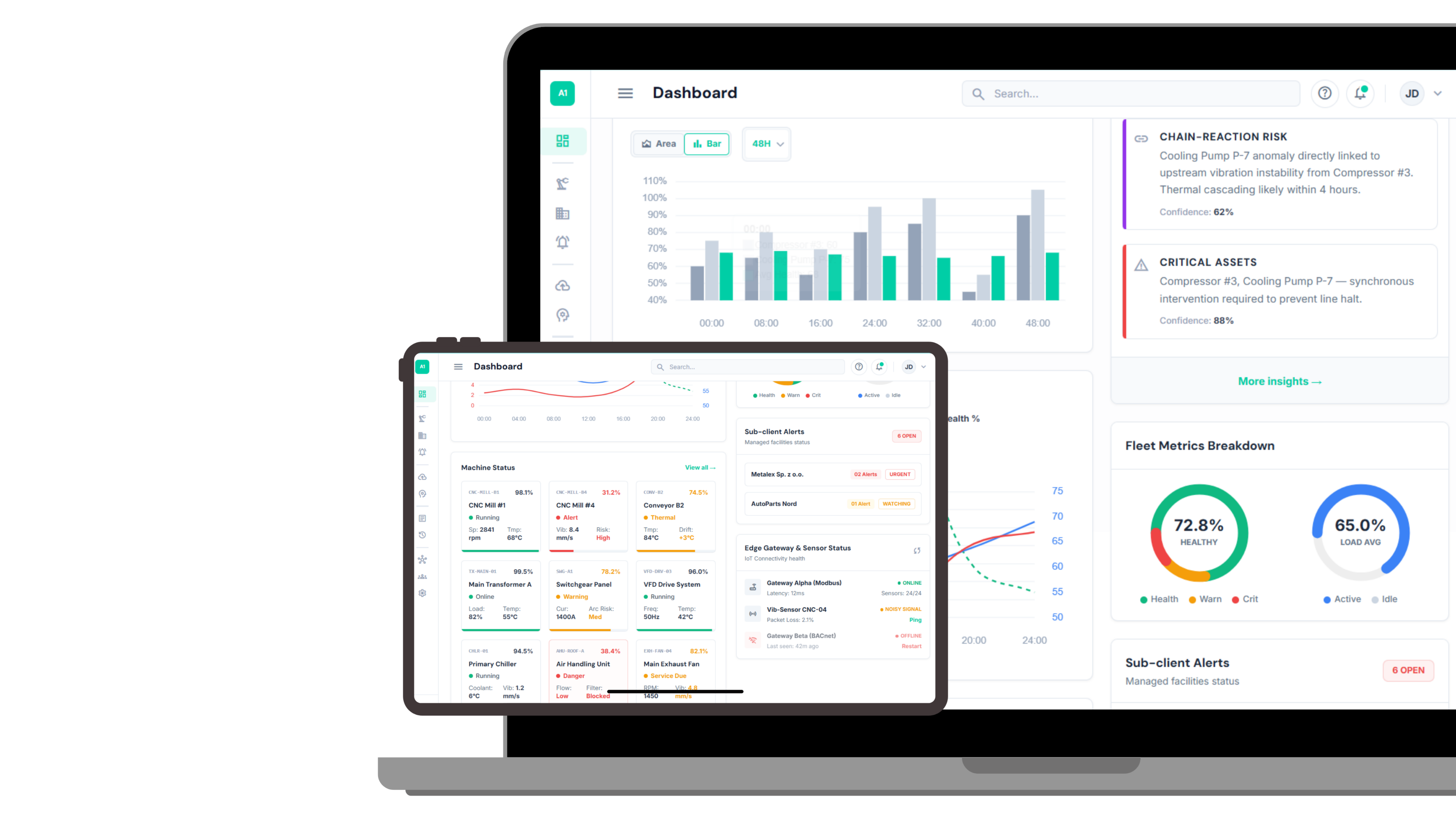
One site may have direct PLC access. Another may only have exports or electrical monitoring. The feature is built to accommodate that reality.
Inspired by enterprise integration workflows, but adapted to SKOLDERN's predictive maintenance use case and industrial operating model.
Plug-and-play collection for asset signals and rotating equipment where direct integration speed matters.
AvailableBring centralized industrial data from existing control environments into SKOLDERN analysis workflows.
AvailableSupport direct collection or connector-based access for site controllers where higher frequency visibility is needed.
AvailableUseful for legacy panels, gateways, remote devices, and independent sensor infrastructure.
AvailableSupport switchgear, electrical auxiliaries, power-quality workflows, and utility-side availability context.
AvailablePush structured JSON, telemetry packages, and external application data into SKOLDERN ingestion paths.
AvailableExtend predictive signals into maintenance planning, work-order preparation, and intervention tracking.
AvailableWork with existing telemetry stores and dashboards where the customer already maintains industrial data visibility.
AvailableStart from the systems already available instead of waiting for a perfect architecture.
Reuse current controls, telemetry, and exported data to reduce new project burden.
Industrial teams trust projects more when integration respects current operations instead of disrupting them.
Move faster into analysis and business proof.
Use different connection paths by site maturity and available systems.
Avoid forcing every site through the same heavy integration path.
Customers see that SKOLDERN can fit the infrastructure they already operate.
Integration friction itself has a cost. The longer critical assets remain outside predictive visibility, the longer the business stays exposed to avoidable downtime.
Identify which systems, exports, gateways, or electrical sources can provide usable context immediately.
Start with assets and systems where visibility will produce the biggest operational and financial return.
Bring the output into reports, maintenance action, or service coordination so predictions do not remain isolated.
Repeat the integration logic across more plants, more systems, or more customer sites once the value is proven.
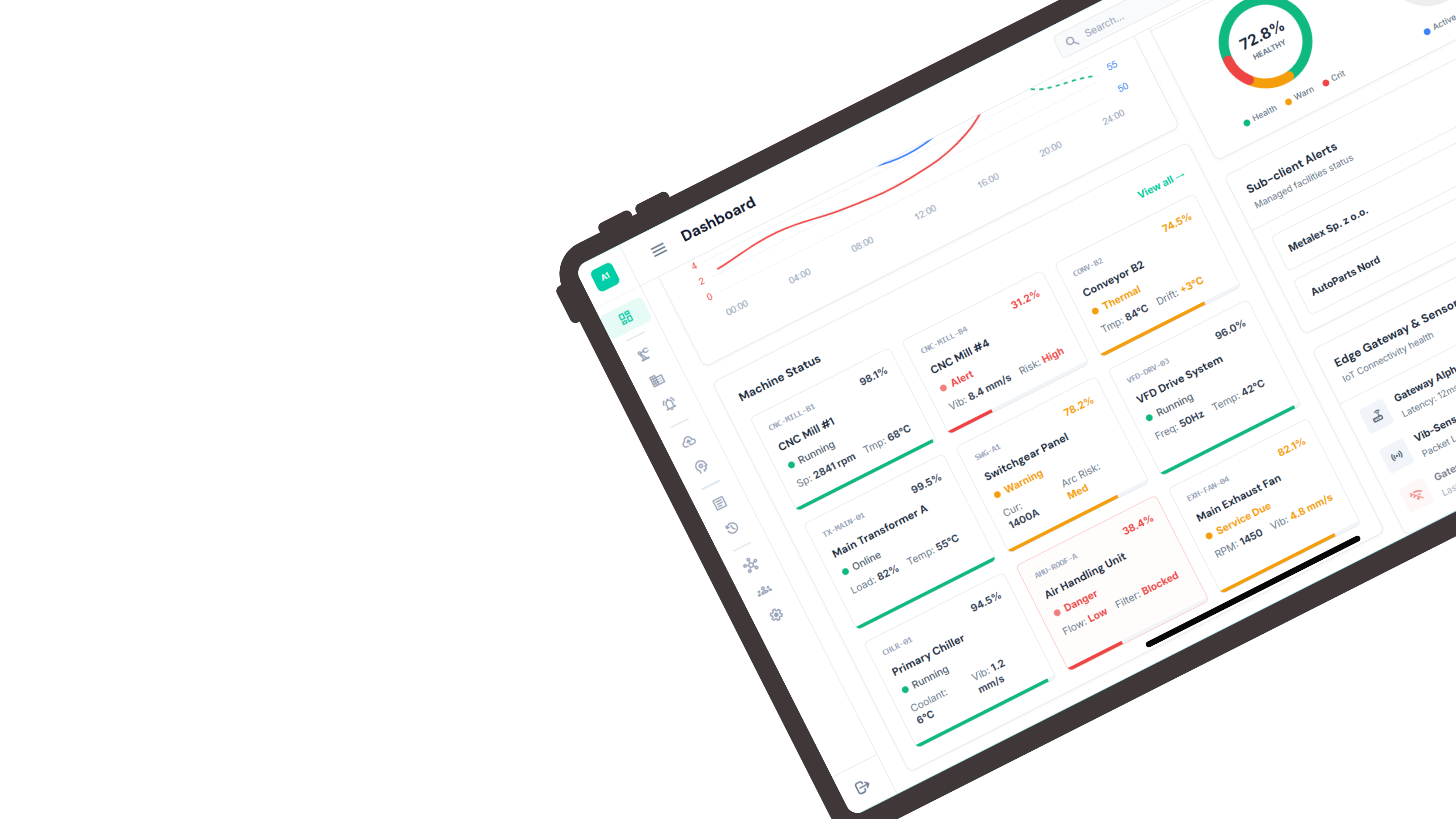
Some sites start from full live connectors. Others begin from exported readings or narrower interfaces. The feature supports both paths.
No. SKOLDERN can adapt the connection path to available infrastructure and rollout maturity per site.
Yes. That is often the fastest way to prove value before deeper live integration is expanded.
Because reducing integration delay means reducing the period in which valuable assets remain without predictive visibility.
Yes. Integration flexibility helps service teams onboard different customer environments faster and more profitably.
We can review current SCADA, PLC, historian, edge, API, or CMMS availability and suggest the most economical rollout sequence.
We will help map the systems already present, identify the lowest-friction starting point, and plan how to expand once results are visible.