Asset context
Understand where the issue sits inside the real machine layout.
SKOLDERN turns raw signals into visual operational context. Instead of sending engineers into a large plant with only a text alert, the platform can point to the asset, likely zone, surrounding equipment, and the fastest route to validate the issue.
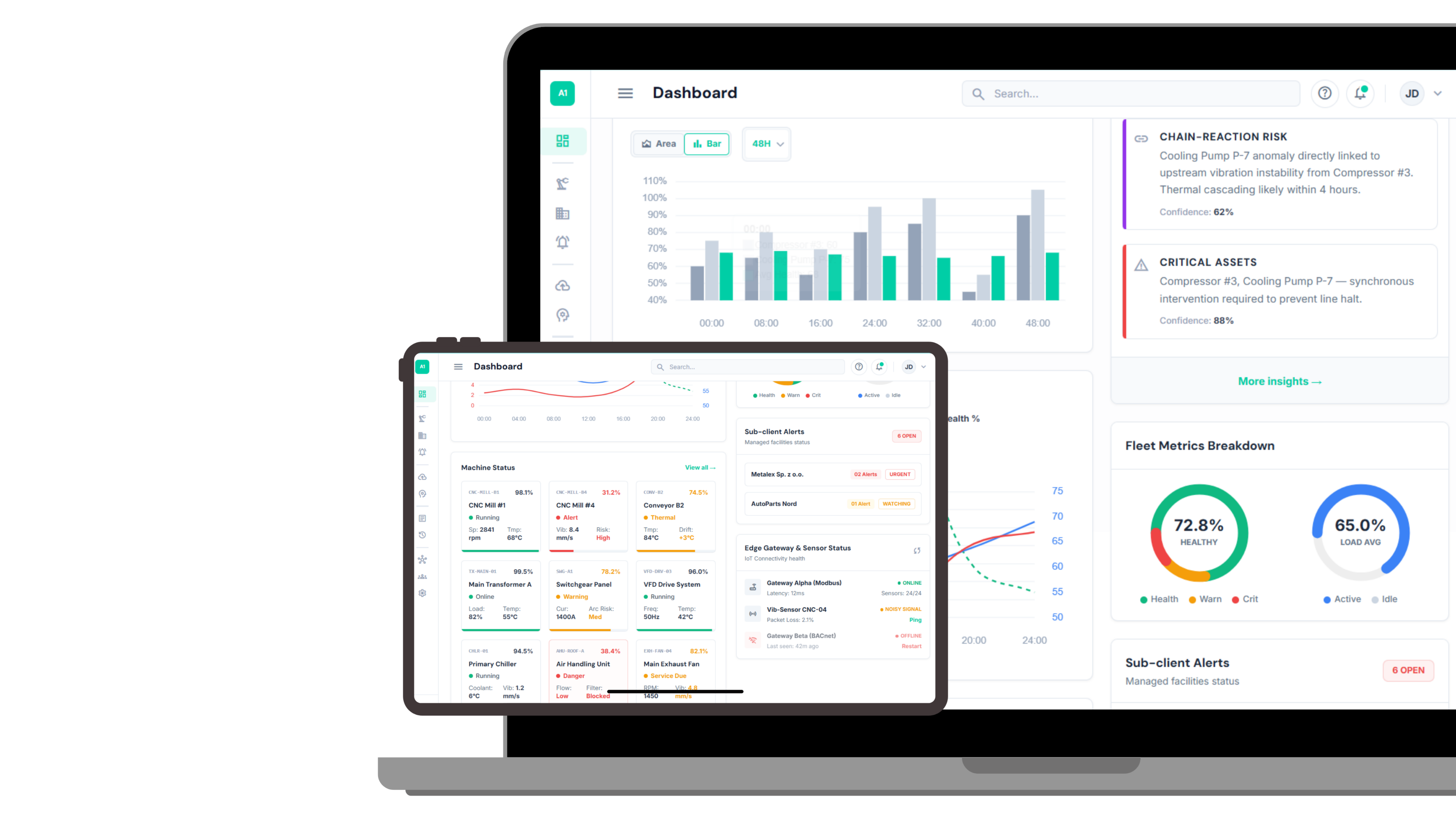
In large industrial environments, engineers lose valuable time identifying which exact machine, bearing zone, connection point, or access corridor is involved. A 3D asset view gives teams a shared operational picture before anyone starts walking the site.
Understand where the issue sits inside the real machine layout.
Support engineers with the quickest inspection path.
Bring attention to the zone with the strongest evidence first.
Make operations, maintenance, and service teams look at the same picture.
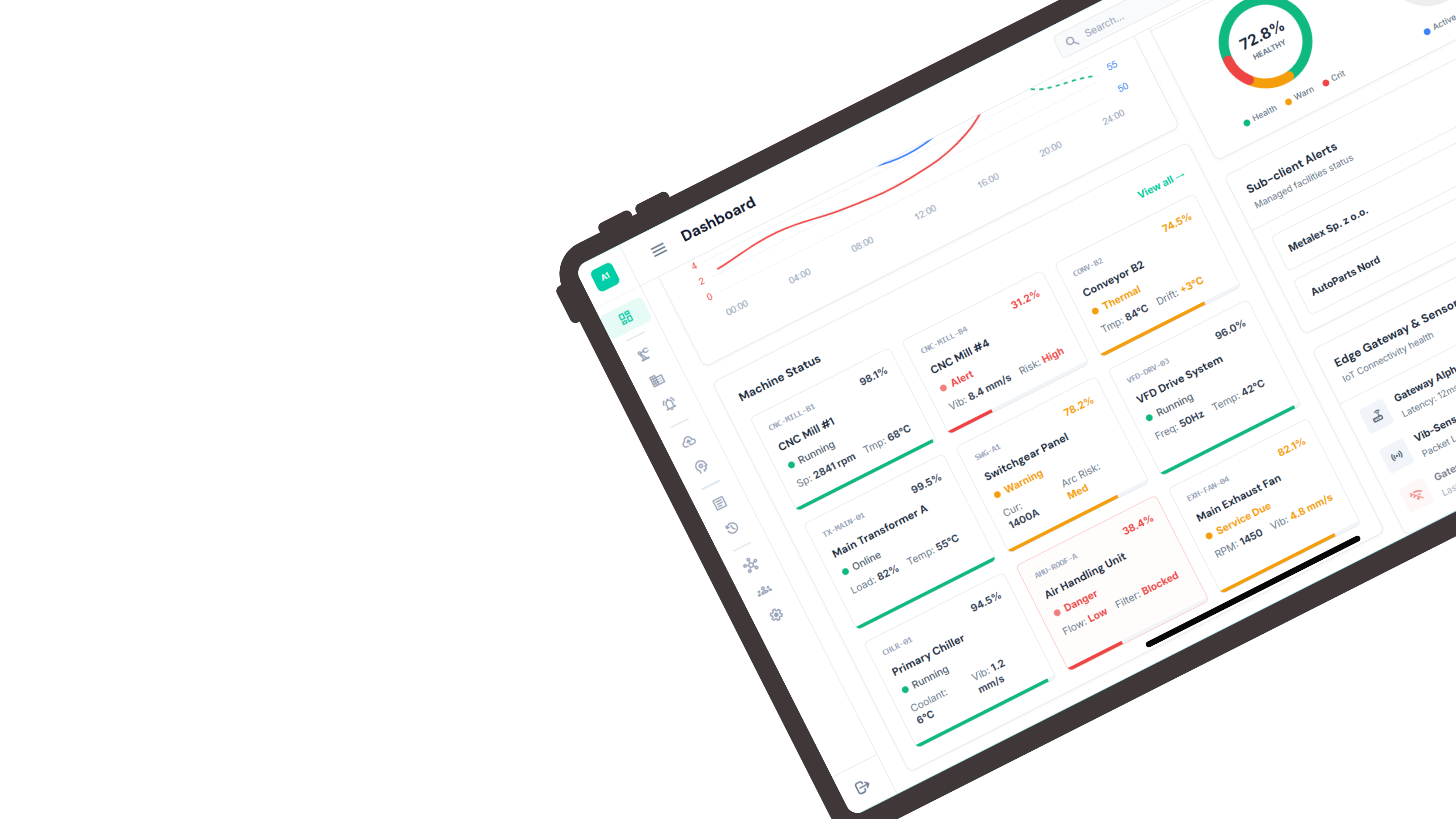
Teams can review the same asset context in the office, in a control room, or next to the machine during validation.
The 3D asset view is designed to shorten diagnosis cycles, improve communication, and reduce avoidable floor search time.
Represent the machine and nearby components so alerts are tied to a recognizable physical layout instead of abstract IDs only.
Bring attention to the probable bearing, drive, coupling, cooling, or support area where the evidence is strongest.
Link health, vibration, temperature, event trend, and asset state to a visual representation that teams can understand quickly.
Technicians can arrive knowing what to inspect first, what access is needed, and which asset neighbors may also be affected.
New engineers or external service teams can understand machine arrangement faster without learning the site by memory first.
Operations, maintenance, reliability, and contractors can discuss the same asset context without ambiguity in calls and reports.
Engineers spend less time locating the issue, repeating checks, or opening the wrong inspection path first.
Better targeting means shorter validation windows, fewer repeated stoppages, and more controlled maintenance intervention.
External teams arrive with more context, reducing wasted visit hours and improving first-visit usefulness.
Move from generic alerting to specific location awareness.
Reduce the time between alert, validation, and work approval.
Help field teams focus on the right machine and zone immediately.
Make evidence easier for management and service providers to understand.
Repeat the business case at feature level: if engineers find the source faster and intervene earlier, labor waste and downtime exposure both shrink.
SKOLDERN relates telemetry, health patterns, and asset metadata to the correct machine and subsystem context.
The engine identifies the likely problem area and presents it as a usable visual context instead of a raw alert only.
Engineers and managers review the same view, align on urgency, and decide whether the next step is inspection, service, or monitoring.
Technicians enter the site with better location clarity, reducing avoidable search loops and time to validation.
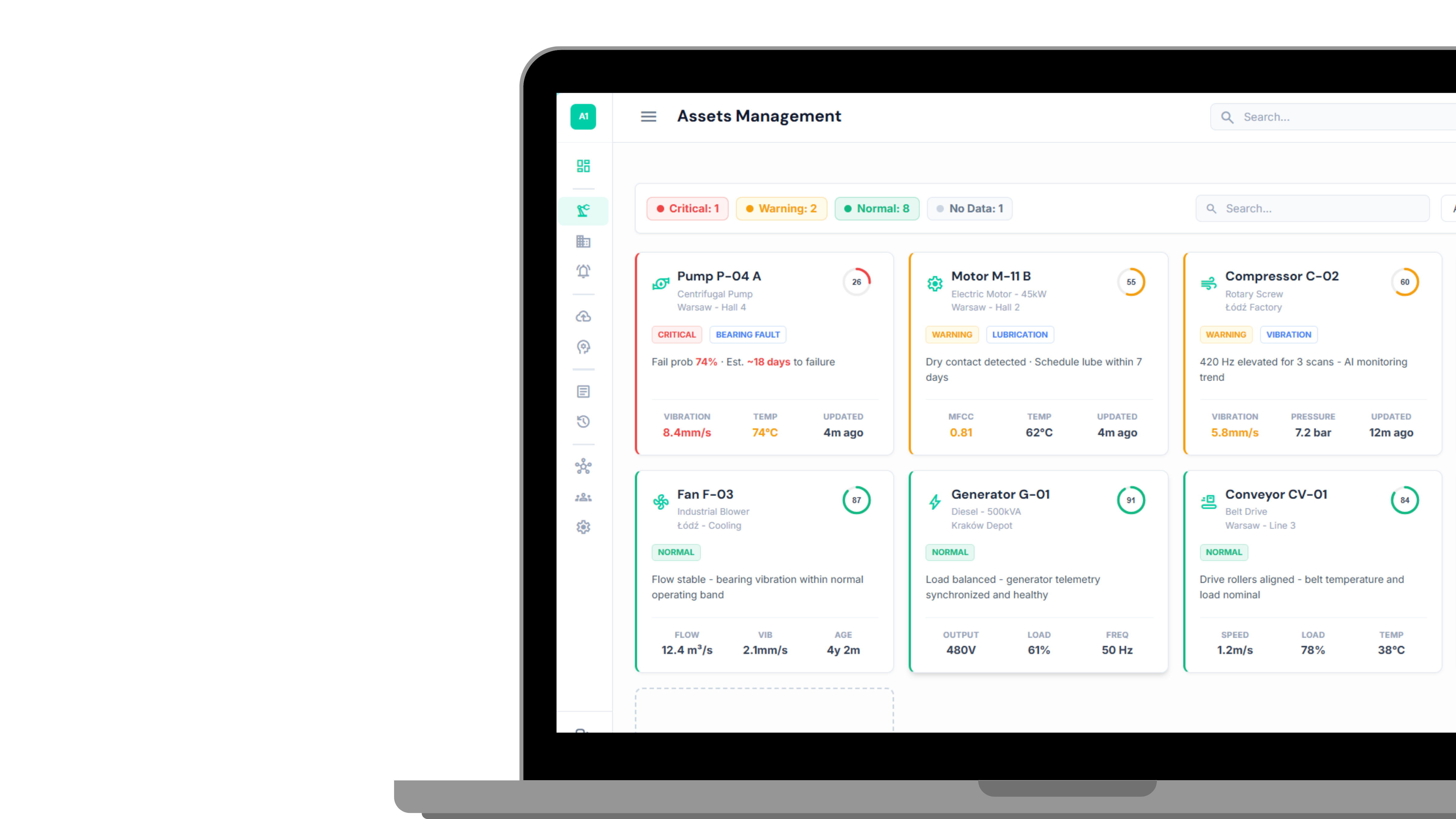
The value grows when equipment is dense, multi-level, difficult to access, or handed over between teams.
No. It complements reports by making machine condition easier to understand visually during review and action planning.
Yes. It helps external teams understand the asset faster, reducing non-productive time during visits and improving customer confidence.
That is where it becomes more valuable, especially when machines are distributed across multiple rooms, floors, or restricted access zones.
Because every hour spent locating the problem delays the right decision, increases labor cost, and may extend production exposure unnecessarily.
A good starting point is an asset family or plant area where fault search is slow, access is difficult, or contractor visits lose too much time before the actual inspection begins.
We can review the asset classes, site complexity, and whether a 3D operational layer would shorten response time in your environment.