No permanent connection required to start
Begin with existing maintenance records, exported readings, operator observations, and asset context. Live machine integration can be added when the business case is clear.
A1 is built for factories that want industrial AI without starting with a large transformation budget. It reviews asset context, operating symptoms, maintenance history, and machine readings to produce a practical risk and savings report.
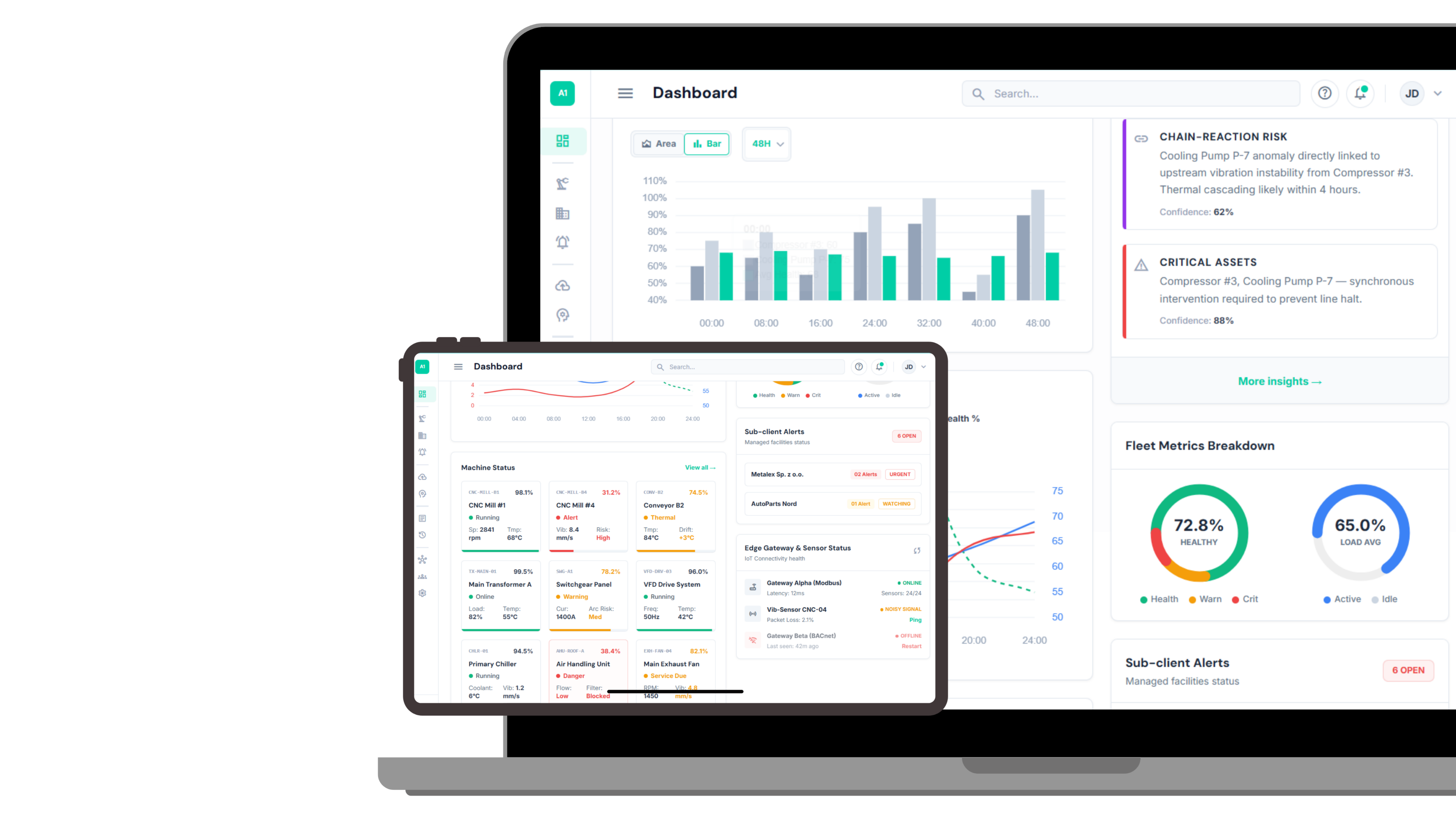
Traditional projects often begin with sensors, gateways, dashboards, and long integration meetings. A1 can begin from the business problem: which assets are expensive to stop, what symptoms are visible, and what decision your team needs next.
Begin with existing maintenance records, exported readings, operator observations, and asset context. Live machine integration can be added when the business case is clear.
A1 studies vibration, temperature, current, pressure, flow, load behavior, alarm history, and maintenance patterns to identify early failure signatures.
The report links each risk to downtime exposure, urgency, recommended action, and whether the next step should be rapid inspection, continuous monitoring, or service support.
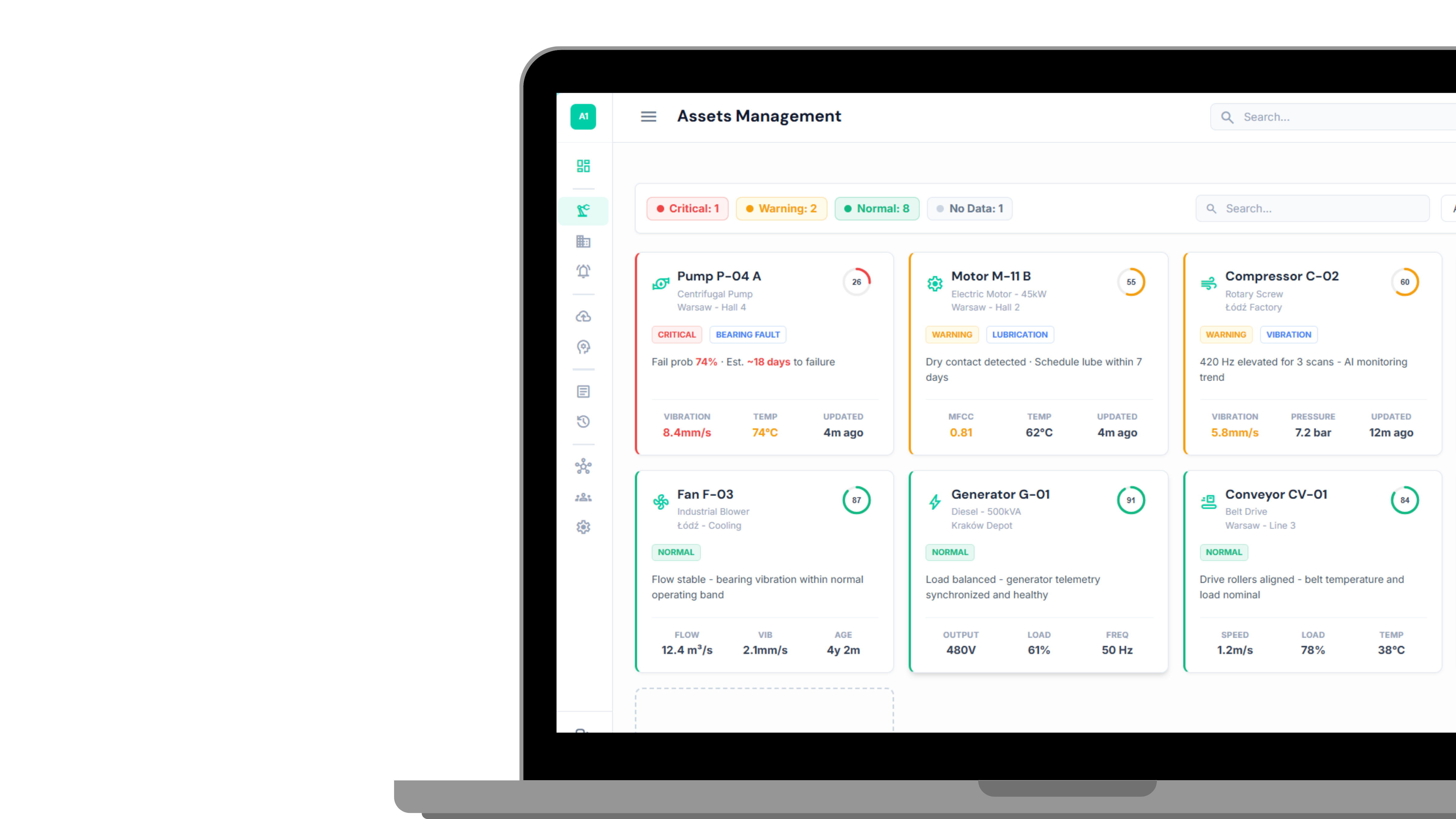
A1 turns machine-health data into a readable business case for maintenance teams, owners, and service partners.
Asset type, process role, failure history, current symptoms, production value, and downtime sensitivity.
A1 searches for abnormal patterns, correlated signals, hidden degradation indicators, and likely failure modes.
You receive health status, likely cause, confidence, economic exposure, and a practical path that avoids unnecessary spend.